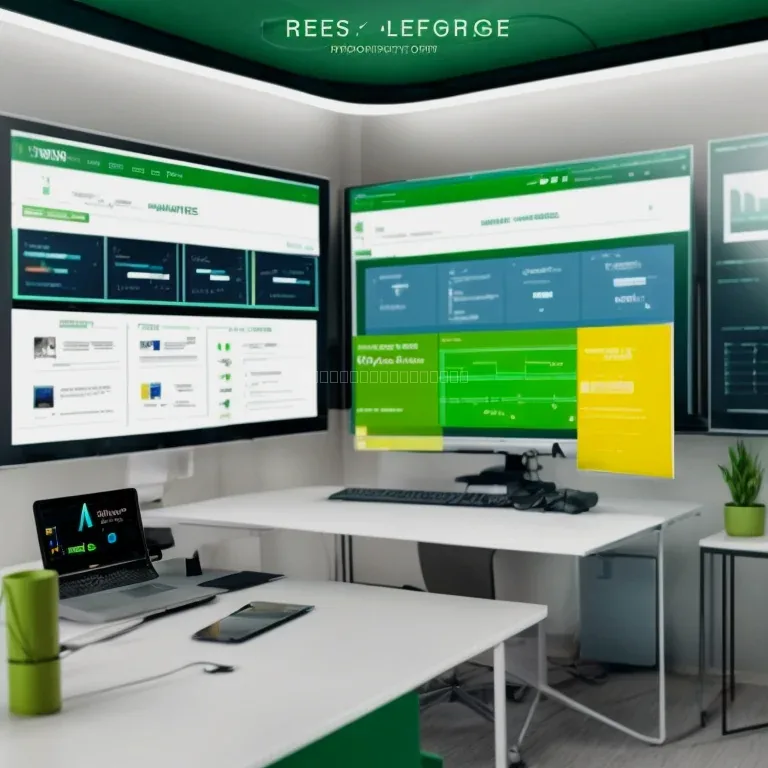
Diagram of AI workflow integration
Case-Driven

Business model: from scenario to production

AIHubMind operates on a repeatable cycle: identify candidate workflows, validate with controlled pilots, integrate with operational systems, and scale based on measured outcomes. Each step emphasizes examples, metrics, and knowledge transfer to internal teams.

Our approach
12

Case studies in Malaysia

28

Workflows optimized

4

Average integration sprints per client

3

Typical deployment patterns

01

Discovery and scenario mapping

We begin engagements with structured discovery sessions that map existing processes and surface decision points where AI can add value. Each candidate workflow is documented with inputs, actors, and expected outcomes so pilots can be scoped tightly.

Examples from past projects include an automated triage for customer feedback, a routing engine for claims processing, and a predictions-driven maintenance schedule. Each example started as a well-documented scenario with baseline metrics and acceptance criteria.

02

Pilot design and control groups

Pilot design focuses on measurable hypotheses: a defined control, sample size, evaluation window, and success metrics. We implement monitoring to capture both model performance and downstream operational impact so decisions about scaling are evidence-based.

  • Define baseline KPI and control group for each pilot
  • Integration patterns: event-driven pipelines, batch syncs, and model-serving endpoints.
  • Operational practices: versioned models, monitoring hooks, and rollback procedures.

A practical approach to AI workflow integration starts with mapping data flows and identifying touchpoints between existing systems and new AI components. For example, a retail chain can begin by connecting POS data to a feature store, then implement a nightly batch scoring job before moving to near-real-time inference. Each phase should include measurable checkpoints, observable metrics and clear acceptance criteria to minimize disruption.

03

Integration engineering and APIs

Case study: customer support automation. By integrating intent classification and retrieval-augmented generation into an existing ticketing system, one regional telco reduced average handle time through assisted responses. The integration involved a middleware layer to sanitize tickets, a fine-tuned intent model, and a human-in-the-loop verification step for high-risk intents.

Scenario insight: start with low-risk, high-frequency tasks and validate outputs with A/B comparisons before widening deployment.

Implementation steps used in the case: 1) data audit to eliminate PII leakage; 2) prototype with a subset of agents; 3) quantitative evaluation on response quality and time-to-resolution; 4) iterative model retraining using corrected labels. This phased roll-out created traceable improvements while keeping production stability as the top priority.

04

Monitoring and observability

Technical blueprint: middleware adapters translate between internal APIs and model endpoints, while orchestration layers manage retries, batching and parallelism. A common pattern is to expose a lightweight internal API that encapsulates model calls, feature retrieval and postprocessing.

Operational checklist: secure credentials management, encrypted data-at-rest and in-transit, observability dashboards for latency and accuracy metrics, and alerting thresholds tied to business KPIs. Include playbooks for incident response and model rollback to reduce downtime.

Real-world scenario: predictive maintenance pipeline

In a manufacturing pilot, sensors stream metrics to an edge aggregator which performs basic anomaly detection; anomalous batches are then forwarded to a central inference service that runs a more sophisticated predictive model. Integration focused on resilient messaging, schema evolution handling, and clear SLAs between edge and cloud components. Regular retraining used labeled failure events collected during scheduled maintenance windows.

05

Operational handover and playbooks

Business alignment: ensure each AI integration maps to a measurable business outcome such as reduced cost per transaction, improved customer retention or higher throughput. Create a prioritized backlog of candidate integrations evaluated by expected impact, effort and compliance risk.

Stakeholders: product owners, data engineers, ML engineers, legal/compliance and operations. Regular cross-functional checkpoints during design, testing and rollout help catch corner cases early and avoid rework.

06

Scaling across teams

Governance and compliance: implement model cards, data lineage tracking and access controls. Practical governance balances agility with auditability—maintain minimal viable documentation for each deployment and expand as the project scales.

  • Model registry entries with metadata and performance baselines.
  • Data lineage that records feature sources, transformation steps and retention policies.
  • Access control lists and role-based permissions for model promotion and inference endpoints.

A concrete governance example: a fintech client adopted a lightweight model card for every model version describing intended use, training data summary and known limitations. This practice lowered review cycles and provided necessary documentation for audits without stalling development.

07

Compliance and data governance

Scaling integrations: use canary deployments, traffic splitting and gradual rollouts to test stability under load. Instrument each release to capture both system metrics and business signals so you can evaluate real-world effect.

Cost management: adopt serverless inference where feasible for spiky traffic, or reserved capacity for steady-state loads. Track cost-per-inference and compare against the business value delivered to keep commitments aligned with outcomes.

Contact AIHubMind

We provide technical guidance and hands-on integration support for AI workflows across industries in Malaysia. Reach out to discuss specific scenarios, review architecture options, or arrange a pilot tailored to your operational needs.

  • [email protected]
  • +60129122866
  • 27, Jalan 9/3A, Pusat Bandar Utara Selayang, 68100 Kuala Lumpur, Federal Territory of Kuala Lumpur, Malaysia
  • 311420255967
Get integration advice